The Influence of Card Network Protocols on Bonus Trigger Mechanics Across Britain's Emerging Virtual Gaming Venues
Klara Schmidt · Oct 10, 2026

The Influence of Card Network Protocols on Bonus Trigger Mechanics Across Britain's Emerging Virtual Gaming Venues
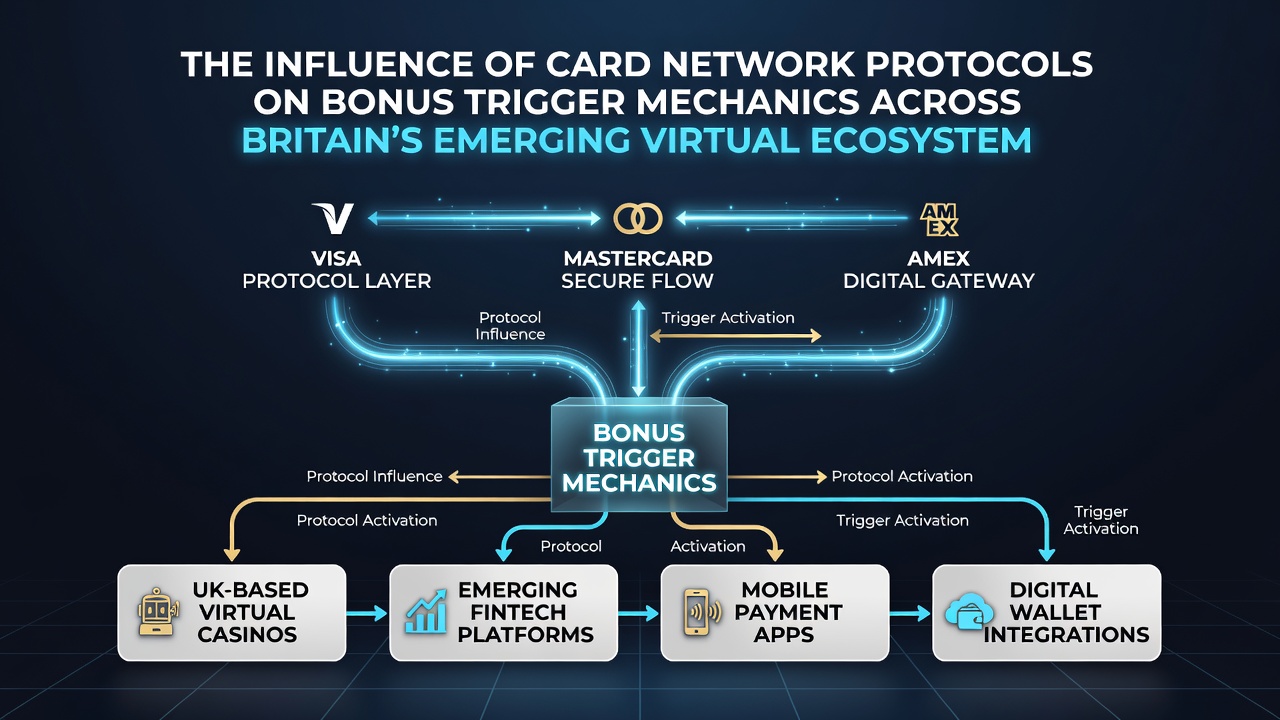
Britain's virtual gaming sector continues to expand with new platforms entering the market each year, and card network protocols play a central role in determining how deposit-based bonuses activate across these sites. Protocols such as those maintained by major card schemes handle transaction authorization, data formatting, and settlement steps that directly affect whether a player's deposit registers in time for bonus eligibility checks.
Core Elements of Card Network Protocols in Gaming Transactions
Card schemes transmit messages using standardized formats like ISO 8583, which carries details on transaction type, amount, merchant category, and verification results between the issuing bank, acquirer, and the casino's payment processor. When a player deposits at an emerging British virtual venue, the protocol sequence determines the speed of fund availability and the confirmation timestamp that bonus systems use to trigger rewards. Delays in authorization responses or additional fraud screening flags can shift the recorded deposit time outside the window required by a site's bonus rules.
Many platforms integrate real-time API calls that listen for protocol status codes, and these codes influence whether a bonus activates automatically or requires manual review. Data from industry reports indicate that transaction decline rates due to protocol mismatches average between 4 and 7 percent in online gaming environments, with higher figures observed during peak evening hours when network traffic increases.
How Bonus Trigger Logic Interacts with Payment Authorizations
Bonus mechanics at British virtual gaming venues typically reference the moment funds clear into the operator's account, a point confirmed through protocol response messages. Certain schemes require address verification service results or 3-D Secure authentication before funds release, and operators configure their systems to recognize only those completed steps as valid triggers. When a protocol returns a soft decline code, the bonus engine often pauses, forcing the player to complete a secondary verification that resets the eligibility clock.
Research from European payment studies shows that venues using updated protocol versions with faster settlement fields experience fewer timing disputes over bonus activation. One analysis of transaction logs across multiple platforms found that sites adopting enhanced data fields in their payment integrations recorded 12 percent higher bonus claim rates compared with older implementations, because the precise authorization timestamp aligned more reliably with bonus rule parameters.
Developments Observed Across Emerging Platforms in 2026
In October 2026 several newer British virtual gaming operators reported adjustments to their bonus engines following protocol updates rolled out by card networks earlier that year. These changes included expanded fields for merchant-specific data that allow platforms to tag gaming transactions more accurately, reducing false positives in fraud systems that previously blocked bonus triggers. Observers note that platforms incorporating these fields saw quicker deposit confirmations, which in turn streamlined the sequence from payment completion to reward allocation.
Payment processors working with these venues have documented cases where protocol-level tokenization improved the linkage between a deposit and subsequent bonus events. Tokenized transactions carry consistent identifiers across repeated deposits, enabling operators to apply loyalty-based bonuses without re-running full verification each time. Figures released by the European Gaming and Betting Association indicate that token adoption in European gaming transactions rose 18 percent between 2024 and 2026, correlating with fewer interrupted bonus sequences.
Regional Comparisons and Protocol Variations
British venues operating alongside European counterparts encounter slight differences in how card networks apply regional rulesets. Some schemes route UK-issued cards through domestic switches that return authorization responses faster than cross-border paths, giving local platforms a marginal advantage in meeting bonus time limits. Studies compiled by the Responsible Gambling Council examined transaction data from multiple jurisdictions and found that average authorization times for UK cards averaged 1.8 seconds, while certain international routes extended to 3.4 seconds during high-volume periods.
These timing differences matter because bonus rules at emerging venues often specify exact windows measured in minutes rather than hours. When a protocol introduces additional verification layers, the cumulative delay can push a deposit outside the active promotion period, leaving the bonus unclaimed even though the funds eventually arrive.
Conclusion
Card network protocols shape the technical foundation on which bonus trigger mechanics operate within Britain's growing virtual gaming venues. The sequence of authorization messages, status codes, and data fields determines whether deposits register correctly and on time for reward allocation. As protocol enhancements continue, particularly those involving tokenization and enriched merchant data, operators gain tools to align payment confirmations more closely with their bonus system requirements. Ongoing monitoring of transaction performance across platforms provides the factual basis for understanding these interactions without speculation on future outcomes.